How a business creates value: the role of intangible assets
A company's value is almost never where you can see it: it lives in its intangible assets, its reputation, trust, knowledge. This post opens a column on how that value is created, protected and exchanged. Told by someone who practices the craft every day and is still learning it.
By Jonathan Arocha
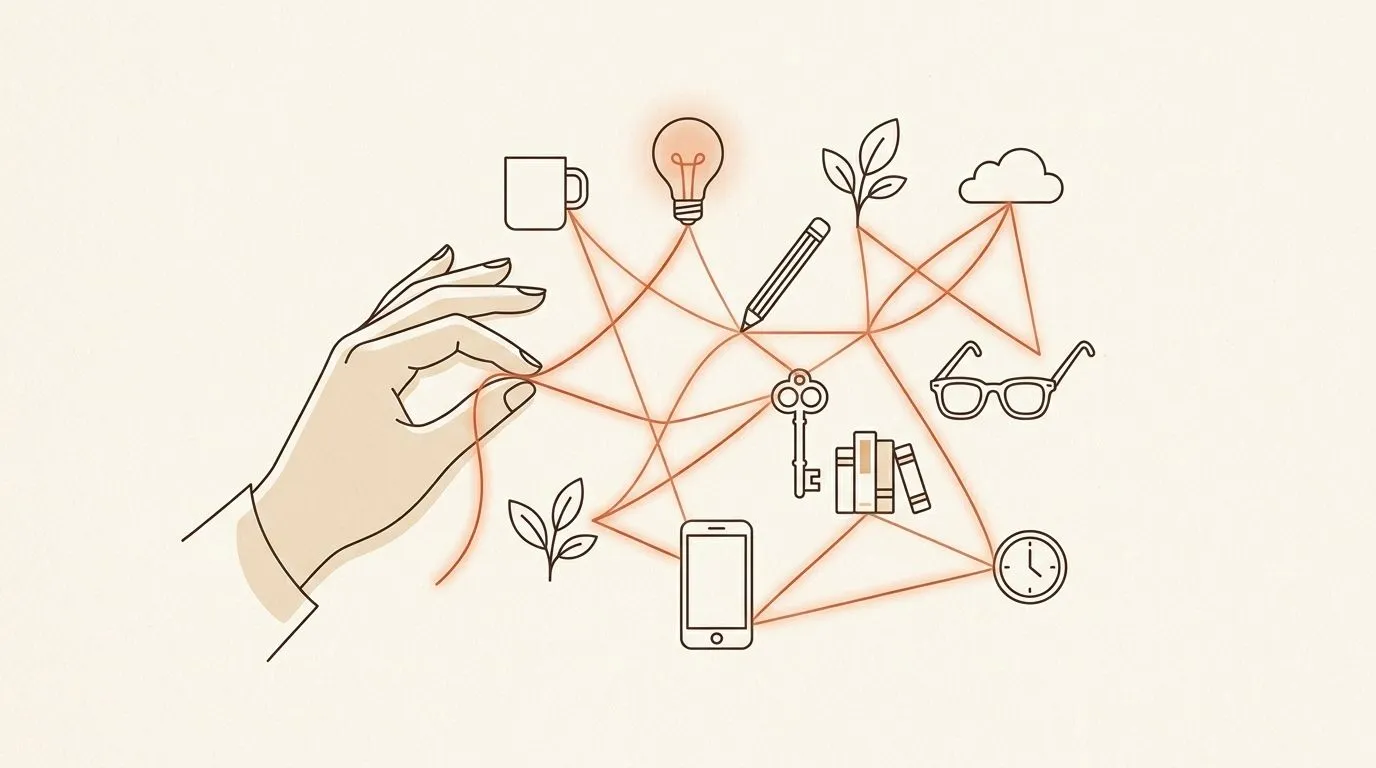
Every business, without exception, is in the same line of work: creating something that matters enough to someone else that they’ll give something in return. Stripped of all the trimmings, that’s what we call creating value. And even though the phrase is worn out from showing up on so many websites and profiles, underneath it there’s a real craft, with its own rules, its own tools and its own tricks. That’s what this section is about: how value is created, how it’s protected and how it’s exchanged, told by someone who practices it every day and is still learning it.
It’s worth starting with the least obvious part: value is almost never where you can see it. A business’s most powerful assets tend to be intangible. A reputation. The trust of a customer who keeps coming back. A way of solving things that nobody else has. A name that opens doors. You can’t touch them and they don’t show up on any inventory, and yet they drive everything else: they have the power to bend an entire value chain, to decide whether a company grows or stalls.
There’s something even more striking. There are businesses built entirely on intangibles. No warehouse, no machines, no physical product: pure knowledge, judgment, relationships, execution. People who start businesses are often doing exactly that, building and managing value chains made of things you can’t see. And like any good that gets exchanged, those intangibles can be valued by the market. Someone is willing to pay for them. A good part of the craft is figuring out who, and why.
That’s why a working definition is worth having, a simple and useful one: creating value is the continuous search for opportunities to exchange. Finding where what someone knows how to do meets what someone else needs, and building the bridge between those two shores. Everything else is detail on top of that basic move.
There are maps for getting around this terrain. Handbooks, concepts, other people’s experience, the books of those who thought about these things before. All of that helps you understand what goes on around a value chain, put names to it and avoid tripping over the same stone twice. They’re useful, and this section will quote them often. But there’s a limit worth keeping in mind: no handbook describes your exact case, because your case didn’t exist when it was written.
That’s where the most interesting part of the craft comes in: in business, up to a point, you make the rules. Almost every company is a combination of pieces that already existed, resting on old, familiar pillars. What makes them unique are the particulars of their context: the city, the moment, the people, their own way of doing things. No two are identical, and that uniqueness is where the room to invent lies.
That room, on top of that, doesn’t live in just one place. Every area of a business can develop its own value chain: sales, operations, the way you serve people, the way you get paid. Innovating in each of them gives rise to two things. On one side, expertise, that know-how that’s hard to copy. On the other, the chance to open new lines of business that nobody could even see before. More than one big business started as a small improvement in a corner nobody seemed to care about.
So far, that’s what the craft is. But a craft can’t be fully explained with definitions: you practice it. And practicing it depends less on knowing concepts and more on a way of standing in front of the work. Some of those attitudes are worth naming, because they’re as much a part of the craft as the theory.
The first one has to do with words. The story you tell shapes how the market perceives your business. It’s not a marketing flourish: people don’t buy what you do, they buy what they understand about what you do, and that depends on how you tell it. Writing clearly, speaking well, organizing an idea, stop being luxuries and become part of the job. For that very reason, even in an age of machines that write on their own, knowing how to think and say something of your own is still an advantage.
Alongside words comes something less prestigious but just as real: intuition. In business it works as a form of knowledge, not as a whim. It’s everything you’ve learned without realizing it, compressed into a hunch that arrives before reasoning does. It isn’t always right, but dismissing it to seem more rational means wasting valuable information.
And in the end, almost the whole craft comes down to relationships. How you talk to your team, to a customer, to a supplier, to a partner. How you read the data in front of you and what story you make it tell. That’s a skill too, as concrete as knowing how to sell or keep the books, even if it rarely shows up on a résumé.
There’s one principle that sums up a good part of this attitude: it won’t always be your fault, but it will always be your responsibility. A supplier who lets you down, a market that shifts, an impossible customer; you didn’t cause any of that, but solving it is on you. That distinction, between fault and responsibility, is what separates the person who complains from the person who creates value.
Add speed to that. The world moves fast and doesn’t stop to wait for anyone. Staying up to date isn’t an optional virtue but the bare minimum for staying in the game, because what worked last year may have stopped working.
And one last one, maybe the most honest: if you don’t like problems, you’re better off doing something else. Creating value is, almost by definition, solving other people’s problems in exchange for something. The problem isn’t what stands in the way of the work. The problem is the work.
That’s what you’ll find in this section: not theory to hang on the wall, but practical, current ideas about how to practice the craft of creating value, drawn from the experience of practicing it. If you’re interested in how value is really created, beyond the clichés, this is a good place to join us.
You might also like
You turned on ads. Your journey is just beginning
Turning on ads feels like a goal reached, but it is not the finish line: it is the starting line. Why every message your ad brings is a piece of the market, and how reading them helps you decide what to advertise, what to charge and what service to create.
Read articleYou launched your website. Now, how to bring it traffic without spending a dollar
Your website is live; the next step is bringing people to it. Why a Google Business Profile is the most effective free source of traffic for a local business, what people look at in your reviews, and the step-by-step to open yours in under an hour.
Read articleDon't stress over your website's policies: we explain it simply
Your website's privacy policy, terms and conditions and cookies sound like boring fine print, until one slip-up costs you dearly. Here we explain, simply and without legal jargon, what each one is, so you can stop stressing and keep your website up to date.
Read article